Crafting an Easy Octopus

Let’s talk about octopus today and then I’ll show you how to make one with a few craft supplies. I bet you know quite a bit about an octopus already. Like do you know how many “arms” an octopus has? Yes, eight! Wow, do you think it would be cool to have 8 arms?! Is the body of an octopus soft or hard? It’s soft, so soft in fact that they can alter their shape so that they can squeeze through small spaces. How many eyes does an octopus have? It has 2 just like we do and they have excellent eyesight! Octopus are actually quite intelligent too. How do octopus protect themselves from predators? One way is to camouflage themselves into their surroundings so its hard for their enemy to see them. Another way is by expelling “ink” which is a dark colored substance and that gives them some time to swim quickly away. Did you know that when an octopus swims, it’s “arms” extend behind them? So, what do you think? Are octopus pretty cool? I think so too! Now let’s craft an octopus! 🙂
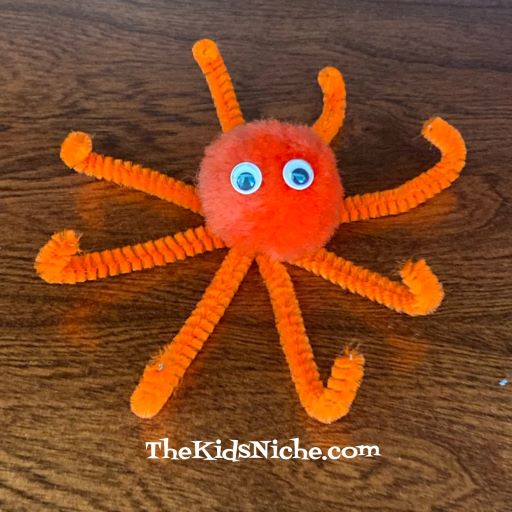
You will need 2 pipe cleaners (or chenille stems), 1 pom-pom, 2 wiggly eyes, a pair of wire cutters or strong scissors and some glue.

To begin, use the wire cutters to cut the 2 pipe cleaners in half so you have 4 pieces.

Arrange the pipe cleaners into a star pattern like in the picture below.
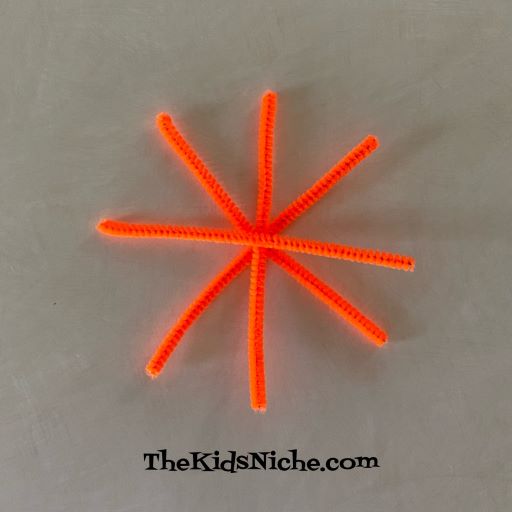
Wrap 1 of the pipe cleaners once around the group to hold them all together.
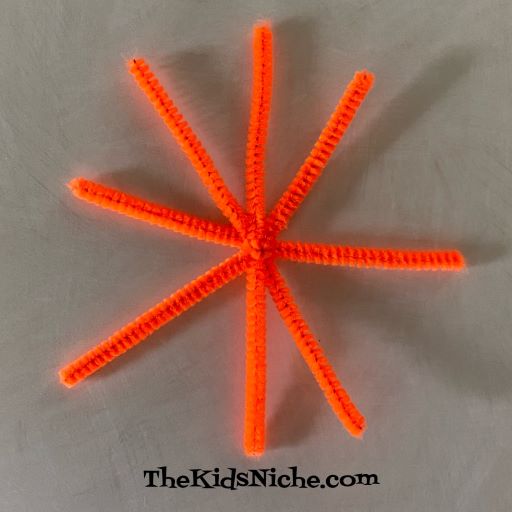
Curl each end of the pipe cleaners up a little bit for the octopus’s arms.
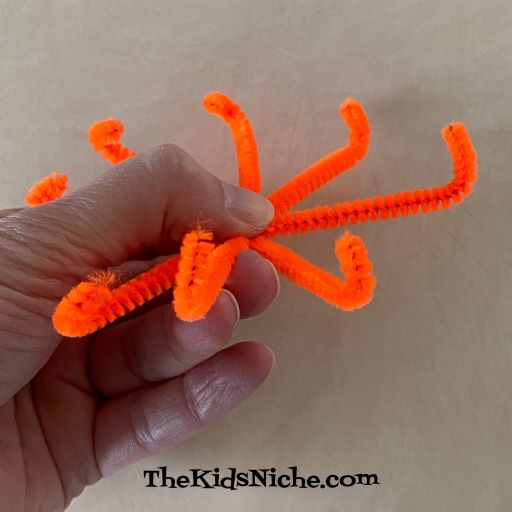
Put some glue in the center of the pipe cleaners…
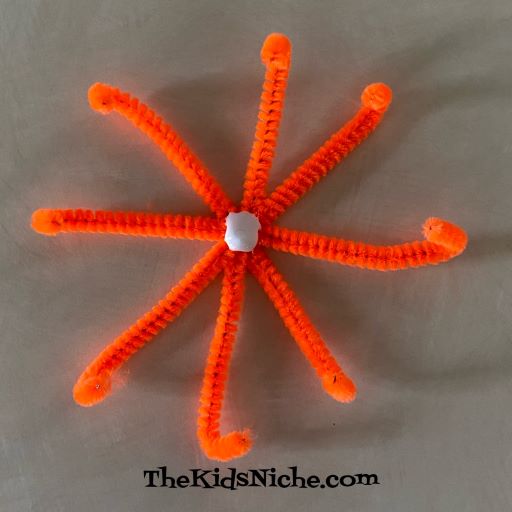
…and place the pom-pom in the center. Push it firmly down into the glue and hold it in place for a few seconds.
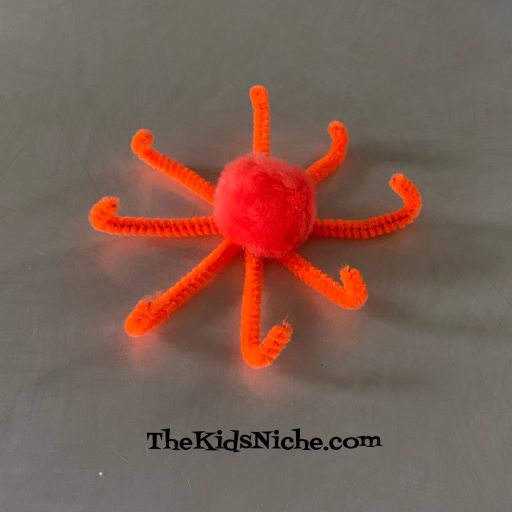
Glue the 2 wiggly eyes to the pom-pom and your octopus is complete!

Find a fun place to display your octopus. Hmm, do you suppose an octopus would be good at playing the piano since it has so many arms? Haha! Yes, we are just being silly now but it’s fun to think about an octopus playing a piano! 😉

I hope you had fun learning a few facts about octopus and that you will have fun making your own! 🙂
Looking For Hints of Spring!

It’s only 10 more days until the official first day of Spring!! Are you getting excited? Whoohoo, I am! It’s going to feel like winter and it’s supposed to snow this weekend, but Spring is really just around the corner! It’s time to take our annual walk around outside (bundle up if it’s cold where you are!) and look for hints of Spring. Here’s a few that I found today!

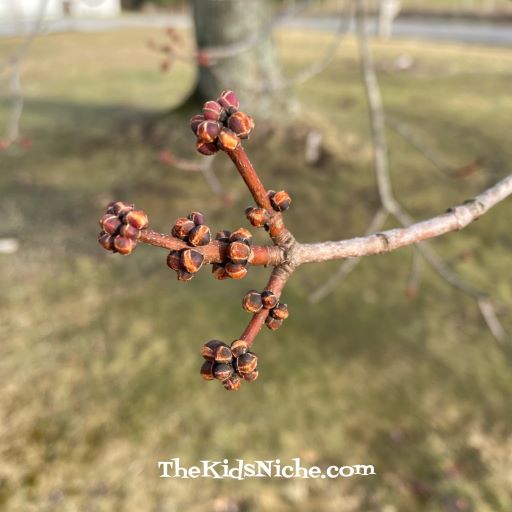
Look at the trees. Are they starting to get buds on them?

Violas are some pretty dainty, but really tough flowers and I found one blooming today!

The daffodil flowers are pushing their way up through the ground.

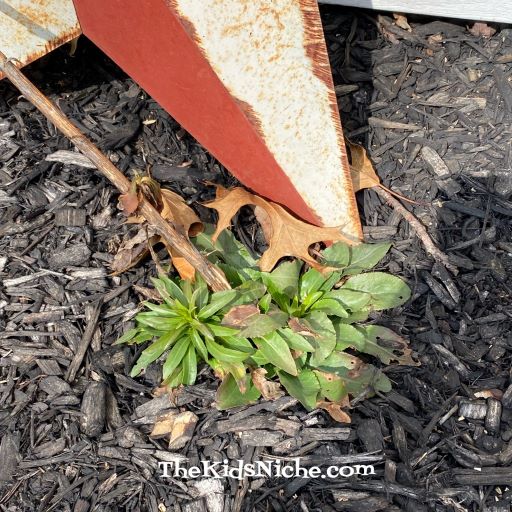
I can’t remember which flower this is at the moment, but, hey, it’s green and it’s growing! 🙂

This may look like a pile of old dried up leaves but look closely and you can see some green leaves growing down inside there! Can you spot any?

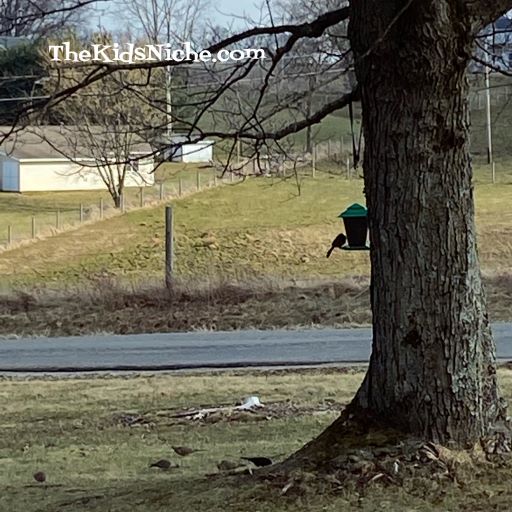
Some of our favorite birds are showing up at the bird feeders again! I counted 15 different kinds of birds here the other day. 🙂

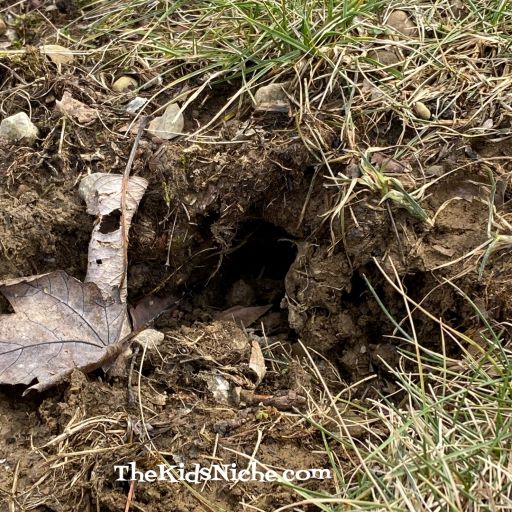
Our dog, Rusty, found this chipmunk hole today. He’s on the lookout now for the occupants of that hole. 😉

Now it’s your turn! What signs of Spring can you find outside close to where you live? If you get some snow this week or weekend, don’t get discouraged because Spring is almost here!! 🙂

Do Pine Trees Have Seeds?

I accidentally discovered something cool about pine trees and I thought you might find it interesting too. We have a very large pine tree in our yard.

I really like the shape of the pine cones that grow on this tree. So the other day I picked 2 off the tree and brought them inside to dry. I planned to paint them and use them for decorations.

I noticed that the pine cones were starting to open up as they dried.

Here is a picture of a dried pine cone and one that I just pulled off the tree today. Can you tell the difference?

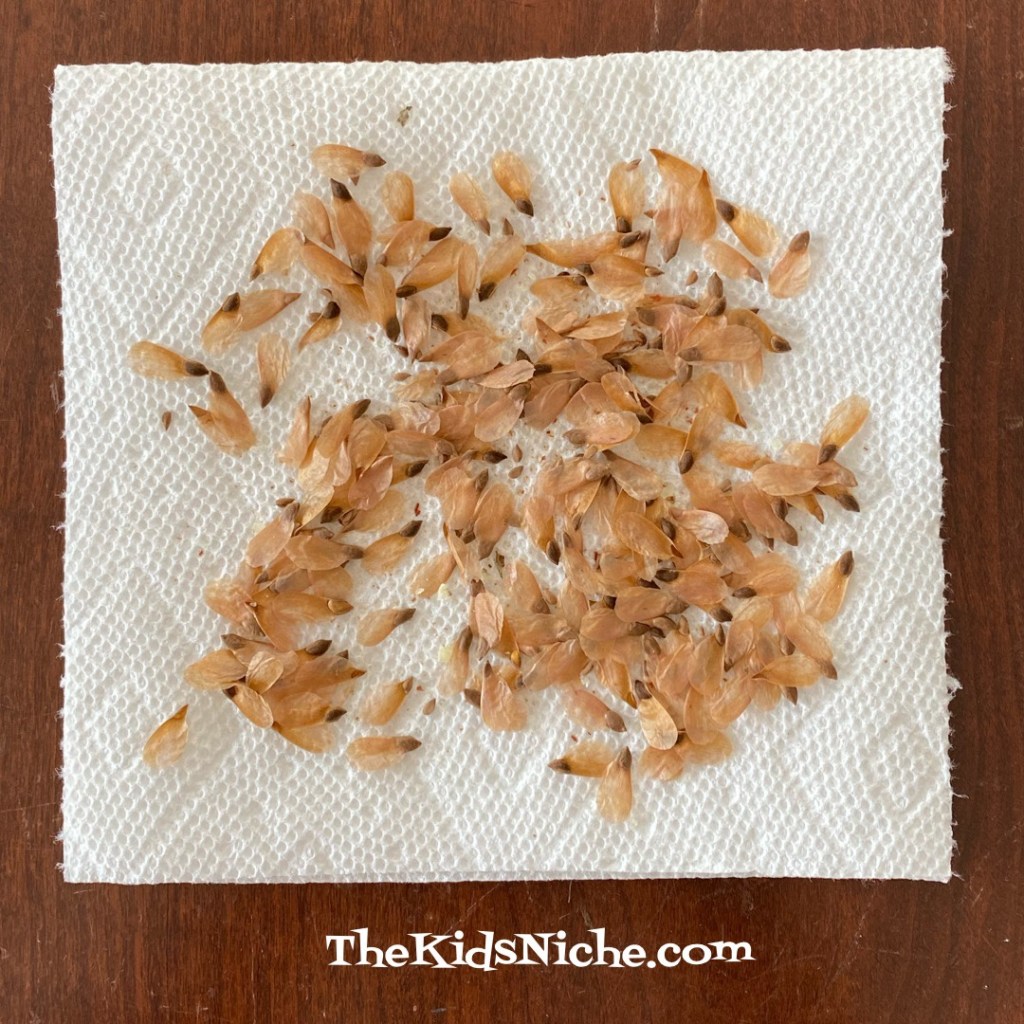
This morning when I picked up the 2 dried pine cones, guess what fell out?

Yep, seeds! 😃 Pretty cool, isn’t it? If you are like me, you might be wondering if those seeds can be planted and grow into pine trees? Well, from what I read online the answer is maybe. The seeds have to go through a process of being frozen for about 3 months and then they can be planted. These seeds have been outside all winter so they might grow. I just might plant a few and see what happens! 😉 Most of the time when you find a pine cone laying on the ground, it has already released its seeds. So now you know where pine tree seeds come from!

A Fall Walk in Nature

Well, Fall (or Autumn) is officially upon us! Fall can be such a beautiful time of year. Days and nights are often cooler and we can see things changing outside as our warm days of summer transition to Fall. Now is a great time to take a walk outside and see what things you can find. Here are a few things we found on our walk…

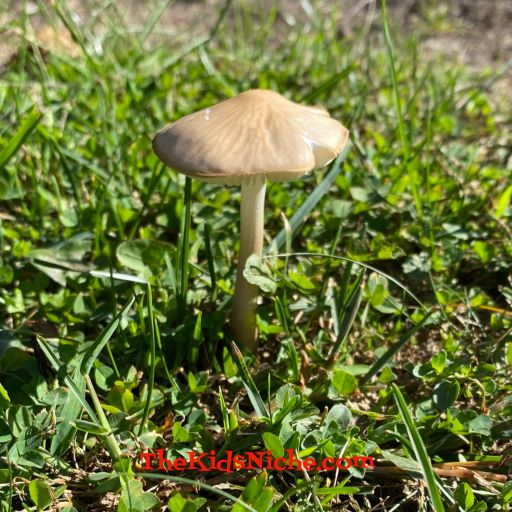
#1.) Toadstools. It’s always fun to imagine fairies or tiny creatures hiding under a toadstool in the rain.

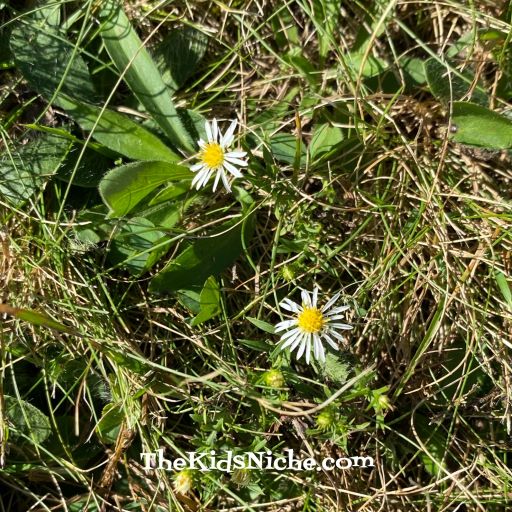
#2.) Tiny wildflowers growing in the grass.

#3.) A lone dandelion…maybe the last one for this year.

#4.) A pile of brown dried leaves

#5.) Beautiful colored leaves

And the trees that still have the colorful leaves on them.

Maybe you will find a weird looking tree like this one with half of it having colorful leaves and half of the leaves that are still green.

#6.) And then there’s the bugs…like a grasshopper

#7.) A katydid

#8.) Or some creepy looking bugs…maybe a stink bug.

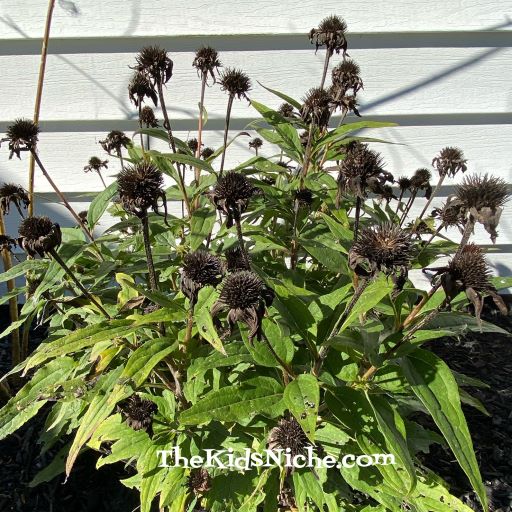
#9.) Plants whose flowers have died now

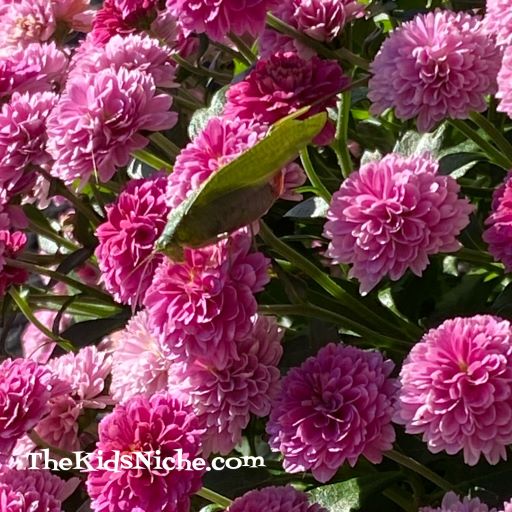
#10.) And plants that are still blooming with beautiful flowers!

#11.) Milkweed plants that are now spreading their seeds for next years plants.

You may find different things in nature than we found. Maybe some caterpillars or some pine cones, an interesting bird or another kind of bug. Whatever you find, I hope you will spend some time out enjoying nature this Fall! 🙂

A Beautiful Place to Vacation

Sorry for fewer posts this week but we had the nicest family vacation in the Outer Banks in North Carolina. If you’ve never been there, you should definitely add it to your bucket list. We love the beaches!

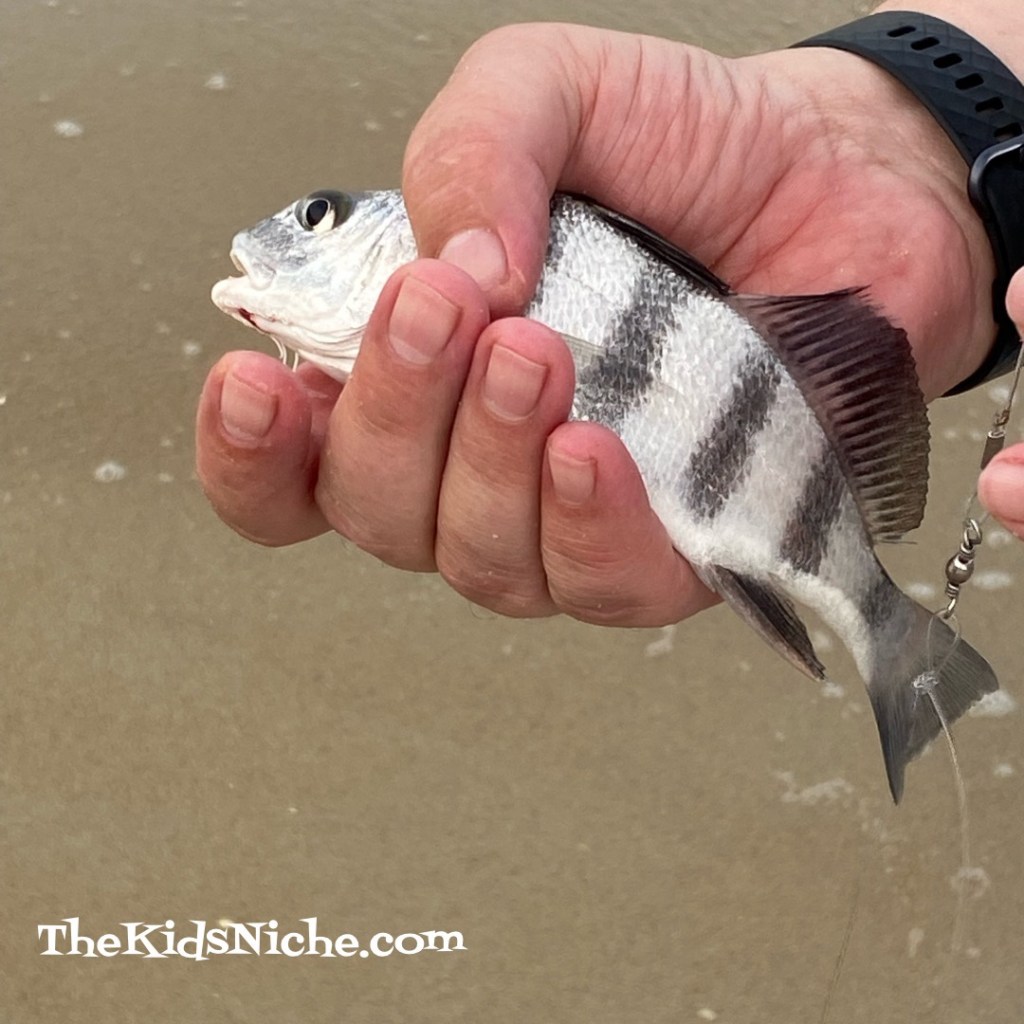
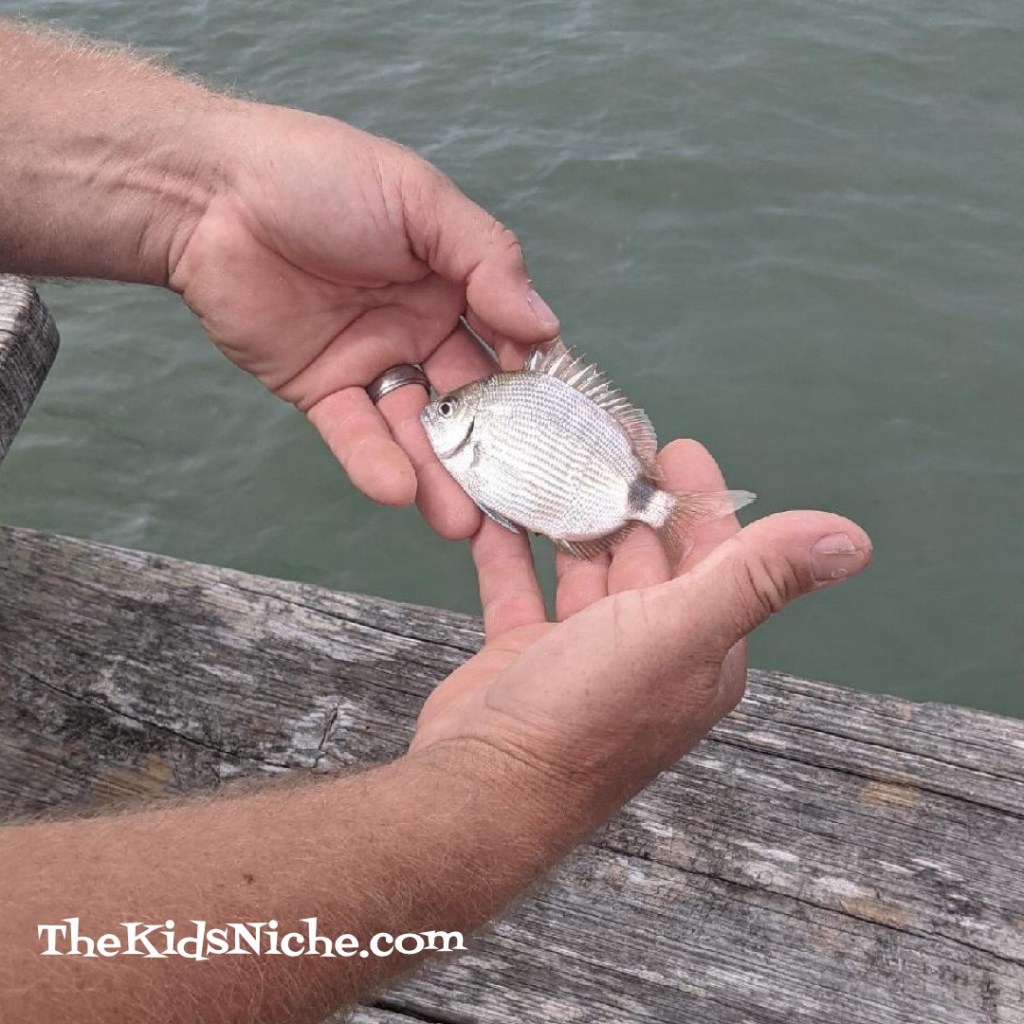
There is so much to do and see that a week is barely enough time to scratch the surface. Like fishing…even though we didn’t catch anything big enough to keep.

Some people caught things they wished they hadn’t caught!

There are lighthouses to see.

Sand to play in…sand turtles to make.

Footprints to leave behind…even if only for a few seconds before they are washed out to the ocean.

An aquarium to visit…

And you must beware of shark attacks in the local gift shops! 😉

We had some stormy weather during our week but still had some beautiful relaxing days to spend with some of our family. The time always goes by so quickly and then it’s time to go home. But we love our time spent in the OBX! 🥰

Fun Things to Do at the Beach

Going to the beach is always so much fun! (If you like sun, sand and water, of course!) But sometimes the kids get “bored” while the adults would still like to have some time to relax. Here are a few suggestions to keep everyone enjoying your day away.

Look for wildlife in the area. They can be quite entertaining. 🙂 Birds…

Depending on what type of beach you go to, you might be able to find some little crabs.

And you can make a nice little bunker for a crab. Haha!

Of course, building sand castles is always fun.

Depending on where you are, fishing might be permitted.

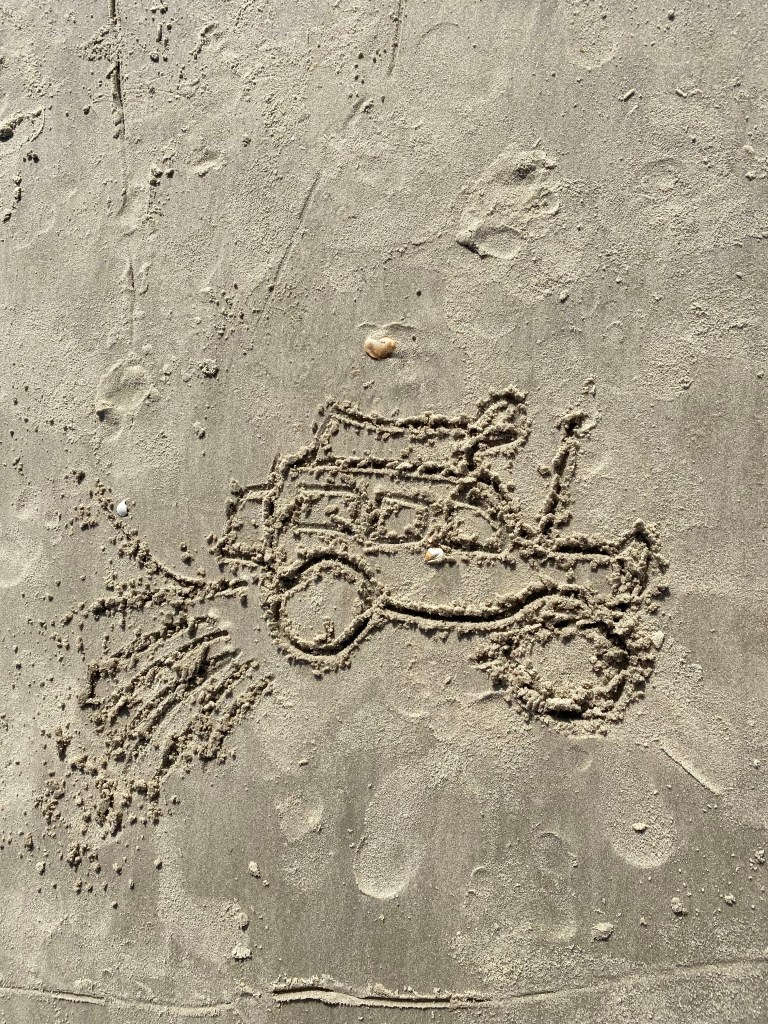
Drawing in the sand is another option. We had some creative artists. 😉

And there is always burying yourself in the sand. Lol

And collecting treasures of pretty shells and stones.

It can be fun seeing what other people catch while fishing. 😳😱

And watching the moon rise in the evening can be a great way to end a wonderful day at the beach. ☺️

More Sneaky Tiny Monarch Caterpillars

We are still finding Monarch butterfly eggs and caterpillars! I thought I would show you some more of these teeny tiny guys and how they like to keep me on my toes by sneaking off while I’m cleaning their “hotels” (or the little containers they are currently living in). Take a look at just how tiny the caterpillars are when they first hatch. See the dime? Look how small they are in comparison to a dime! Can you find 3 caterpillars in this picture?

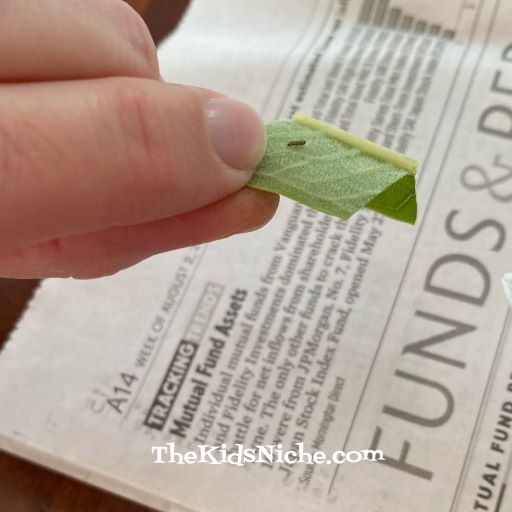
Here’s one of them a little closer up. Compare it to the print on the newspaper. Wow!

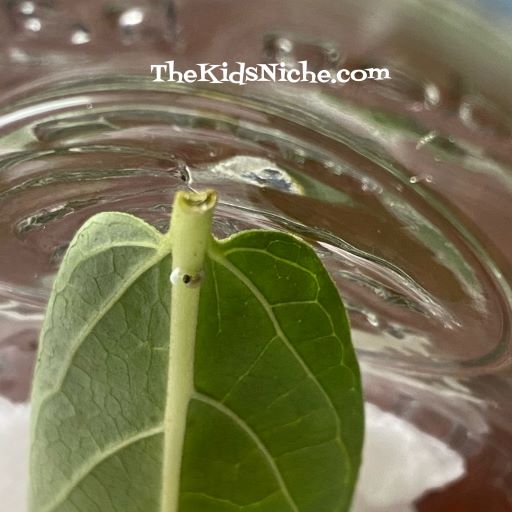
It’s not surprising that I have trouble keeping track of them, is it? They also like to hide on the underside of a milkweed leaf.

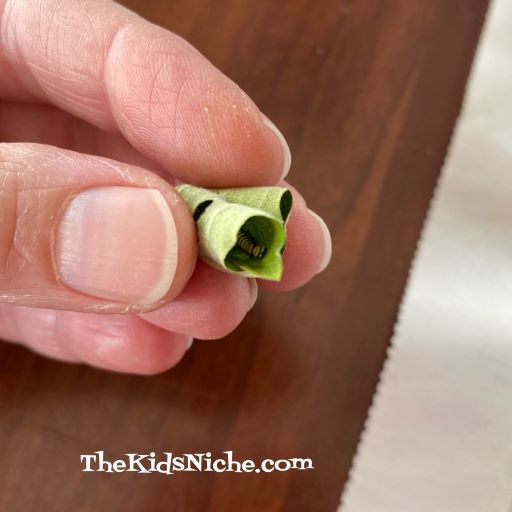
Can you spy the caterpillar hiding inside the rolled up leaf?

I write down how many caterpillars are inside each “hotel” so I can make sure I find all of them. And I have to unroll every little piece of milkweed leaf to find them. This picture is after the leaf was unrolled.

This picture just looks like a dried up, rolled up leaf right? Should I just throw it away?

NO! Look who was hiding inside!! 🙂

Ok, now THIS guy was feeling VERY adventurous for a baby that is less than a day old!! He crawled out of his “hotel” even when the lid was on! Can you find him? He looks like a little line on the top of the lid. Oh my!

Now this caterpillar was one that I found outside when he was already this big. He was just sitting on a leaf, not moving while I got a new “hotel” ready for him. Until I walked away for a couple of seconds to get something I needed. And then he tried to make a run for it!! Haha! Don’t worry…when I offered him a milkweed leaf to crawl onto he was quite happy to come back. 😉 He thought the leaf tasted very yummy!

One more picture for today…this caterpillar was quite a fast crawler and he also made a break for it when I stepped away for a few seconds. He went happily back inside with the fresh milkweed leaves. Maybe he was just checking to see if any of the other “hotels” looked better than his? 😉

Did you enjoy reading about some of my caterpillars adventures? You might think raising caterpillars till they become butterflies would be rather boring, but it’s really not! I think they are rather funny and I love talking to them (“Hey, you! Get back here!”) and feeding them and watching them grow. 🙂

Monarch New Beginnings

It’s that most wonderful time of the year again! No, I’m not talking about Christmas. It’s the time of year when the Monarch butterflies have come back into the United States from wintering over in Mexico. The females are laying eggs on their favorite plants and people all over are doing their part to help the Monarch caterpillars survive to become butterflies. The number of Monarch butterflies has greatly declined over the last decade. It’s a great feeling to know you are helping to preserve these beautiful butterflies! And so, let’s take a peek at how the process gets started. Monarchs like the Milkweed plants and the female Monarch butterflies will lay their eggs on Milkweed. Here are a couple types of Milkweed that grow around where we live in Ohio.

Common Milkweed. This plant will grow wild along roadsides and its fun to watch as you travel around and see how many Common Milkweed plants you can find.

Swamp Milkweed. This plant I purchased from a greenhouse and planted in my flowerbed in hopes of bringing the Monarch butterflies close by where we could see and help them.

Butterfly Milkweed. This plant I also bought at a store and planted in my flowerbed in hopes of drawing the Monarchs here. Aren’t the little orange flowers so pretty?

When you see these types of milkweed plants, look at the leaves and see if you see any Monarch caterpillars crawling around on them. They are often on the under side of the leaves. What does a Monarch caterpillar look like? Here is a picture of some Monarch caterpillars that are partially grown.

But I’m getting the cart before the horse! Whoa, back up there! When you see milkweed plants, not only should you look for the Monarch caterpillars, but you should look for their eggs. They are usually on the bottom side of the leaves too. They are super tiny so they are easy to miss seeing. Can you find the egg in this picture?

Yep, that little dot on the leaf over on the left hand side of the picture is a Monarch caterpillar egg. 🙂 We’ll call the egg the first step in the process. So the next step is when the egg hatches. The caterpillar that hatches from that tiny egg is so small it can be very hard to see it. I tried to take a close up picture of one that had just hatched. It’s rather hard to make it out, but that black dot is the caterpillar’s head.

The baby caterpillar will first eat the egg it hatched from and then they will look around for some milkweed to munch on. Milkweed is the only plant that a Monarch caterpillar will eat. There are 4 caterpillars in this next picture. Can you find all 4? 2 of them are super little! The other 2 have been around for a few days.

Here is another picture of a caterpillar that is really small, but bigger than the newly hatched ones. You can also see 3 more caterpillars that are older.

So now you know what plants to look at to see if you can find any Monarch caterpillars or eggs. And you know how super super tiny they are when they hatch. We’ll take a look at watching them grow on another day’s blog post. Happy hunting! 🙂

Where Do Green Beans Come From?

If you live in a big city, you may not have seen where green beans come from except for a can of green beans, like this one, or a bag of frozen green beans from a grocery store.

If you live in the country, your family might grow green beans in your garden just like our family does. So for those of you who’ve never had the chance to experience growing your own green beans, I’d like to give you a peek into what that looks like. It all starts with preparing an area of dirt or a garden box so you have a place to plant the green bean seeds. You will see green bean seeds in lots of stores in the spring time. There are different types of green beans, but this is the kind we are growing this year.

Here’s a closer up picture of the seeds.

We planted our green bean seeds on May 25th this year and they grew into large plants that look like this:

If you gently move the leaves aside and look underneath, you can see green beans growing there! And they are ready to pick!

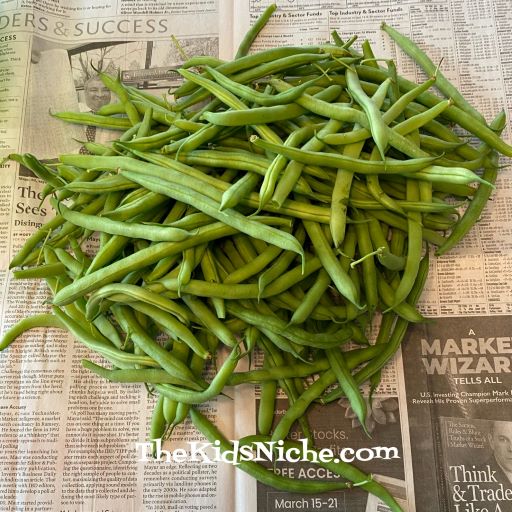
I picked a bunch of the green beans off the plants and brought them inside our house.

The way I learned to prepare green beans is to start by laying a piece of newspaper across your lap and add a small pile of beans to it.

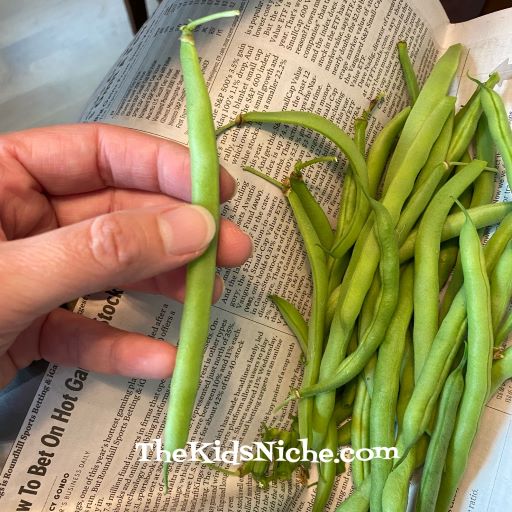
Here’s what a fresh green bean, straight from the garden, looks like:

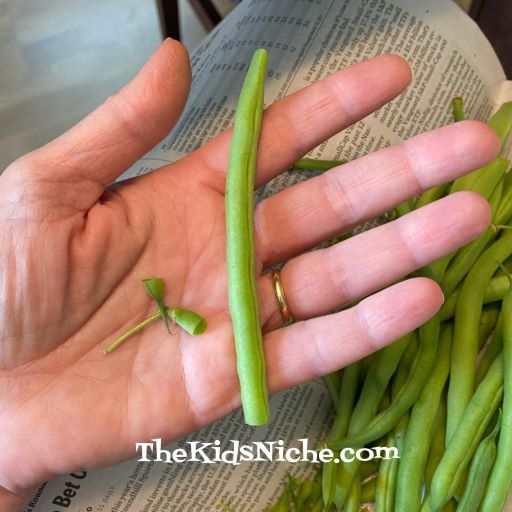
Notice that the bean has a little pointy portion that sticks out on each end. We snip or break both ends off.

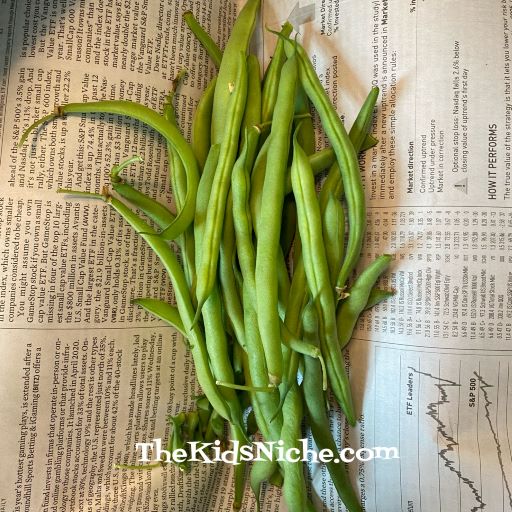
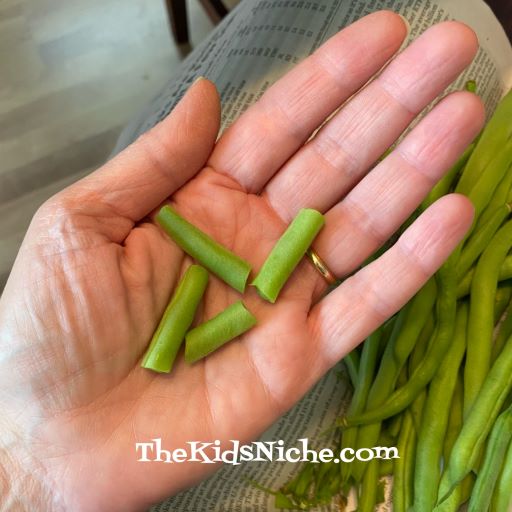
Then we snap or break the bean into several pieces. The number of pieces it’s broken into depends on how long the bean is. Here’s about the size we break them into:

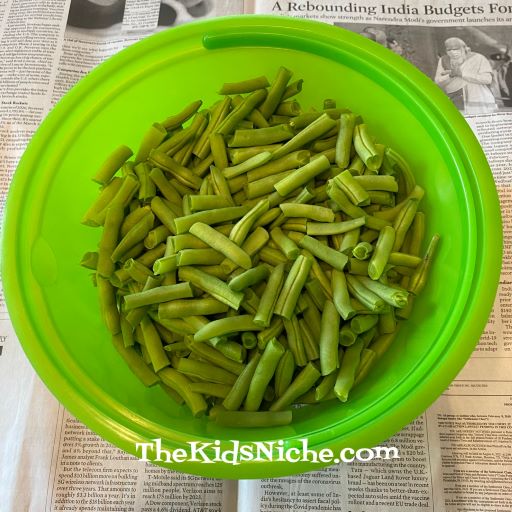
Our big pile of green beans yielded this amount of snapped green beans:

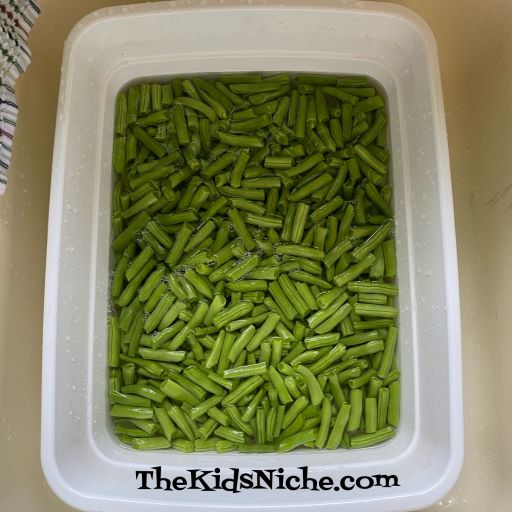
The next thing that happens to the green beans is to put them in a dishpan with water and gently scrub them a little between your hands to get them clean.

Now it’s time to cook them! We put them in a large pan and add some water and put the pan on the stove and turn the heat on. We cook them until they soften to our desired tenderness, which might vary from one person to the next.

I’m not sure these pictures actually show the difference, but the beans will change color somewhat as they cook.

The green beans are finally ready to eat! How do you like to eat your green beans? I like them with butter melted on them and sprinkled with some salt! Yum!! They are also very delicious cooked with some ham.

If you have never done your own green beans from “scratch”, I’d like to suggest you look for some fresh green beans in your grocery store or at a nearby farmer’s market. It’s a great experience for kids and adults to prepare their own fresh green beans. (Mind you, after you’ve done several bushels of green beans at one time, it does get rather tiring! Been there, done that! Lol) I hope you’ve enjoyed this glimpse into fresh green beans straight from the garden! 🙂
Very Cool Imperial Moth

Yesterday evening when I was walking up our front steps, I saw something strange looking hanging on the side of one of the steps.

At first it looked like just a blob to me, but when I looked closer I thought it was some kind of an insect, but a very weird looking one.

After studying it for a few minutes, I began to think it might be a moth, but I had never seen one like that. I have raised Monarch butterflies for a couple of years now, so I’ve seen them hatch out from their chrysalis and their wings are folded up and their body is fat with fluids. The Monarch slowly pumps the fluid into their folded up wings and they slowly expand to look like the butterfly wings you would normally see. I started thinking the wrinkly blob part might be wings from a newly hatched moth.

Our family has a lot of interest in plants and butterflies/moths and other wild animals, so I sent a text with pictures to some of our kids to see if they knew what it was. Sure enough, our daughter-in-law thought it might be an Imperial moth. After doing a little research online, I think she is right. They can have over 6″ wingspan so they aren’t exactly little moths! One of the types of host plants that they like are maple trees and there is a maple tree right above the steps we found this guy hanging on. I watched him and waited for a while and I was finally rewarded by seeing his wings expand! (I’m saying “he” but I have no idea if it’s a male or female.)

He was so cool looking!

I watched and waited a while longer and he finally opened his wings up part way!

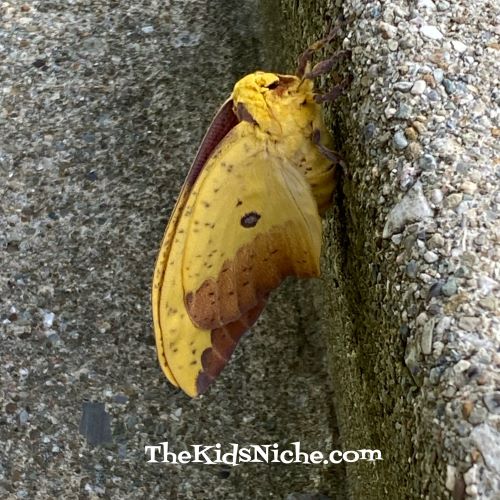
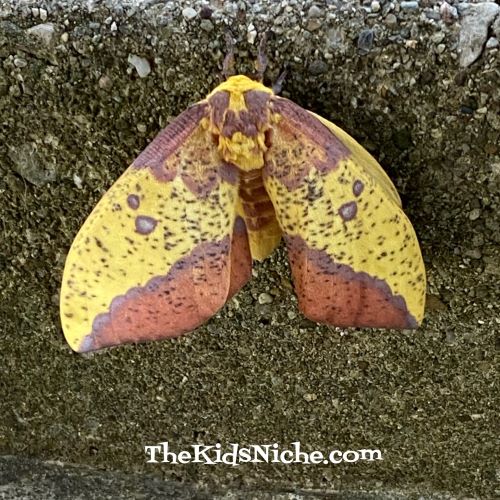
It was starting to get dark by this time and even though I kept checking on him, I didn’t get to see him open his wings all the way. But the wind was blowing and I got a picture of him that lets you see underneath to where there is another part of his wings.

Look at this picture I found online of an Imperial moth. It looks very much like a leaf in the Fall!

I’m rather sad to say that he was gone this morning when we went outside. But what a neat experience! So keep your eyes open when you are outside because you might just see something new and interesting like an Imperial moth! 🙂

If you would like to read more about the Imperial moth, here’s a nice article from Wikipedia:

https://en.wikipedia.org/wiki/Eacles_imperialis