We’ve Been Canning Red Beets Again

Late summer is the time of year we process the red beets we grow in our garden boxes. Do you know where red beets come from? Do you like to eat red beets? Since I shared this experience with you last year, I’m sharing last year’s post again for anyone that might have an interest in learning more about this yummy healthy vegetable. Here we go! 🙂

You’ve probably seen red beets and even eaten them. I’m guessing you bought them from the store in a can like this:

But do you know where red beets come from? Have you ever seen a red beet plant? We grew our own red beets this year in one of our garden boxes. (The orange flowers you can see are Marigolds which can help keep bugs away from the red beet plants.)

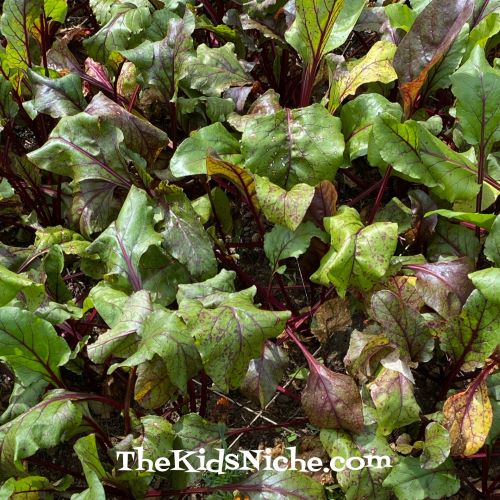
The red beets grow under ground and then they are dug or pulled up. Here’s a closer look at the plants and what you can see above ground.
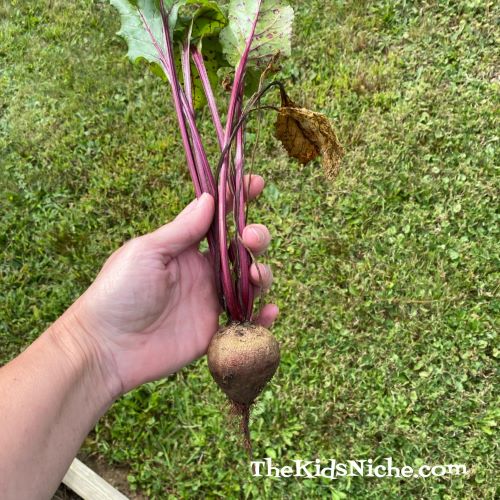
This is what one red beet looks like when it’s taken out of the ground.
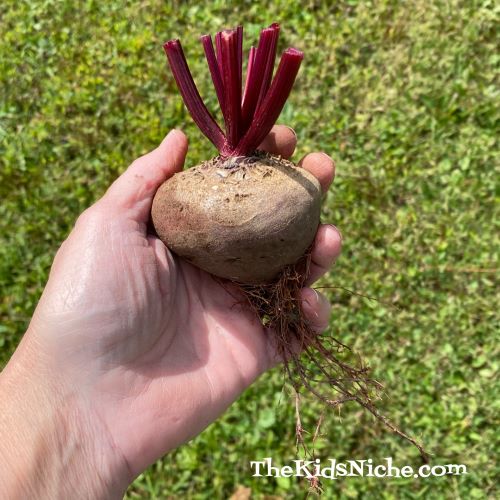
A raw red beet is hard and is best eaten cooked. There is a process to follow if you want to cook red beets. First you cut off the top leaves, but it’s important to leave about 1-2″ of the stem intact. And you don’t cut off the roots. If the roots or the stem are cut off, the color will bleed out of the red beet when its cooked.
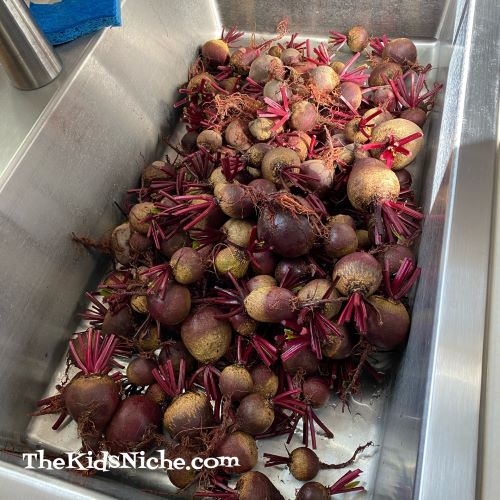
We sprayed the red beets outside with the water hose in order to remove the biggest part of the dirt from them. Then they were taken into our kitchen and put in the sink.
Next they are washed by hand and put into a large pot.
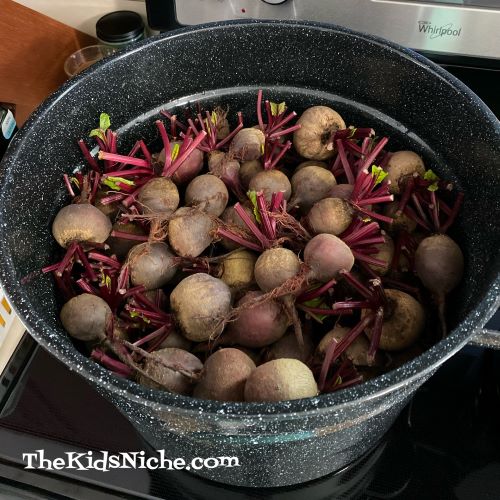
Water is added to the pot so that the red beets are all covered with water.

The water is brought to a boil and the red beets are cooked until the skin of the red beet will slide off the outside of the beet. The beets are then put into a large pan of cold water so they can cool. Once they are cool enough to be handled without burning your hands, each beet is gently “squeezed” and the skin, the root and the stem will slip right off.

And ta dah, there is your red beet ready for eating or canning into jars.

We canned or preserved our red beets so we will be able to eat them all through the winter time. In order to can the beets, they are cut into smaller pieces.

The red beets are packed into special glass canning jars and some salt and boiling water is added. A two piece set of a metal lid and a metal ring and placed on the top of each jar. Then the jars are processed in a pressure canner for a while. When the right amount of time has passed, the canner slowly cools down and once the pressure is gone, the jars of beets can be removed. As the jars cool, the metal lid will seal and that is what makes it safe to keep the red beets for a longer time on a shelf.
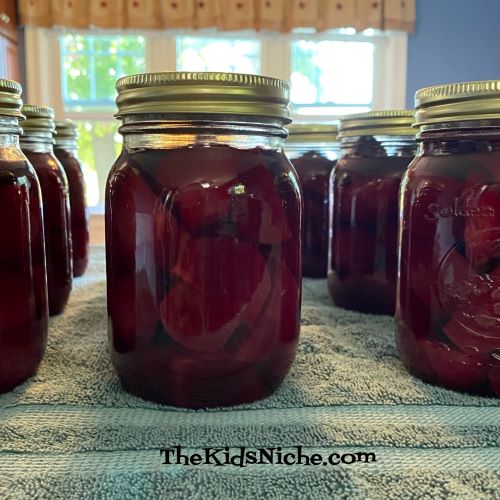
That is an abbreviated version of the canning process, so if you ever can red beets yourself, be sure to follow the instructions that come with your pressure canner. 🙂 Now you know where red beets come from! I hope you’ve enjoyed learning more about red beets!

Where Do Red Beets Come From?

You’ve probably seen red beets and even eaten them. I’m guessing you bought them from the store in a can like this:

But do you know where red beets come from? Have you ever seen a red beet plant? We grew our own red beets this year in one of our garden boxes. (The orange flowers you can see are Marigolds which can help keep bugs away from the red beet plants.)

The red beets grow under ground and then they are dug or pulled up. Here’s a closer look at the plants and what you can see above ground.

This is what one red beet looks like when it’s taken out of the ground.

A raw red beet is hard and is best eaten cooked. There is a process to follow if you want to cook red beets. First you cut off the top leaves, but it’s important to leave about 1-2″ of the stem intact. And you don’t cut off the roots. If the roots or the stem are cut off, the color will bleed out of the red beet when its cooked.

We sprayed the red beets outside with the water hose in order to remove the biggest part of the dirt from them. Then they were taken into our kitchen and put in the sink.

Next they are washed by hand and put into a large pot.

Water is added to the pot so that the red beets are all covered with water.

The water is brought to a boil and the red beets are cooked until the skin of the red beet will slide off the outside of the beet. The beets are then put into a large pan of cold water so they can cool. Once they are cool enough to be handled without burning your hands, each beet is gently “squeezed” and the skin, the root and the stem will slip right off.

And ta dah, there is your red beet ready for eating or canning into jars.

We canned or preserved our red beets so we will be able to eat them all through the winter time. In order to can the beets, they are cut into smaller pieces.

The red beets are packed into special glass canning jars and some salt and boiling water is added. A two piece set of a metal lid and a metal ring and placed on the top of each jar. Then the jars are processed in a pressure canner for a while. When the right amount of time has passed, the canner slowly cools down and once the pressure is gone, the jars of beets can be removed. As the jars cool, the metal lid will seal and that is what makes it safe to keep the red beets for a longer time on a shelf.

That is an abbreviated version of the canning process, so if you ever can red beets yourself, be sure to follow the instructions that come with your pressure canner. 🙂 Now you know where red beets come from! I hope you’ve enjoyed learning more about red beets!

Where Do Green Beans Come From?

If you live in a big city, you may not have seen where green beans come from except for a can of green beans, like this one, or a bag of frozen green beans from a grocery store.

If you live in the country, your family might grow green beans in your garden just like our family does. So for those of you who’ve never had the chance to experience growing your own green beans, I’d like to give you a peek into what that looks like. It all starts with preparing an area of dirt or a garden box so you have a place to plant the green bean seeds. You will see green bean seeds in lots of stores in the spring time. There are different types of green beans, but this is the kind we are growing this year.

Here’s a closer up picture of the seeds.

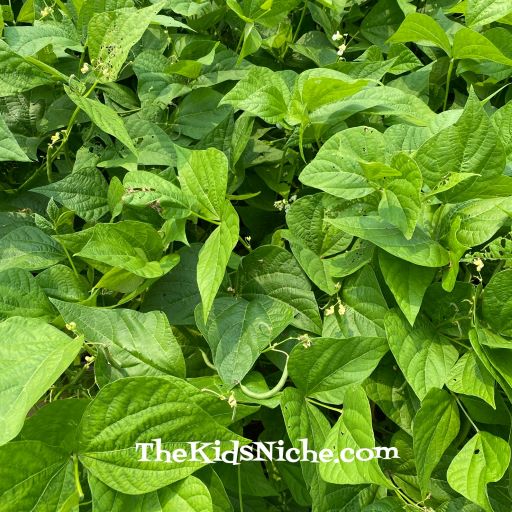
We planted our green bean seeds on May 25th this year and they grew into large plants that look like this:

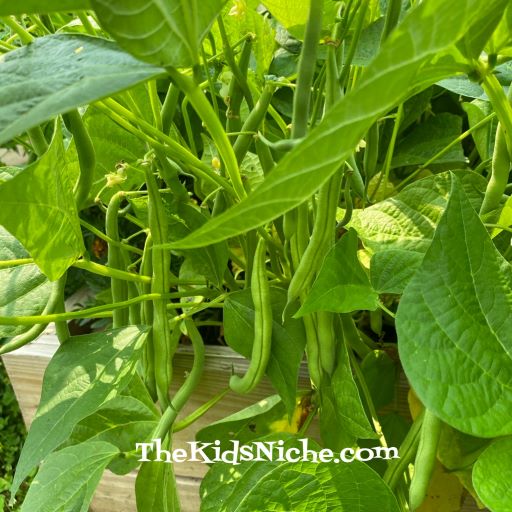
If you gently move the leaves aside and look underneath, you can see green beans growing there! And they are ready to pick!

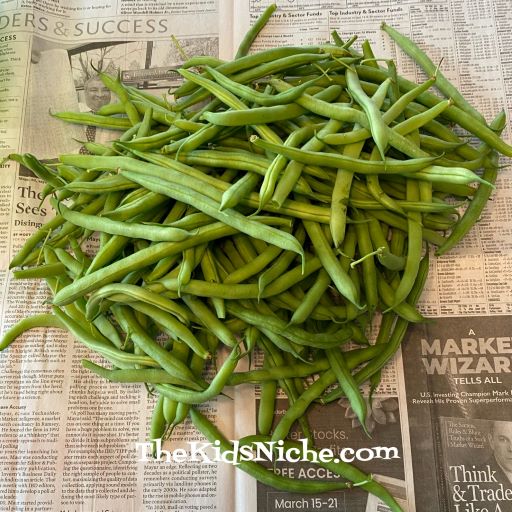
I picked a bunch of the green beans off the plants and brought them inside our house.

The way I learned to prepare green beans is to start by laying a piece of newspaper across your lap and add a small pile of beans to it.

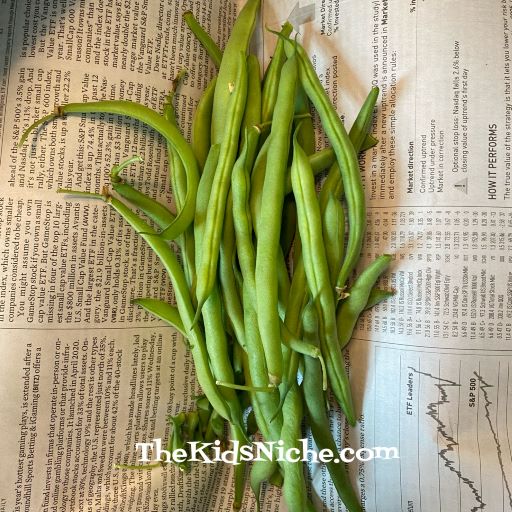
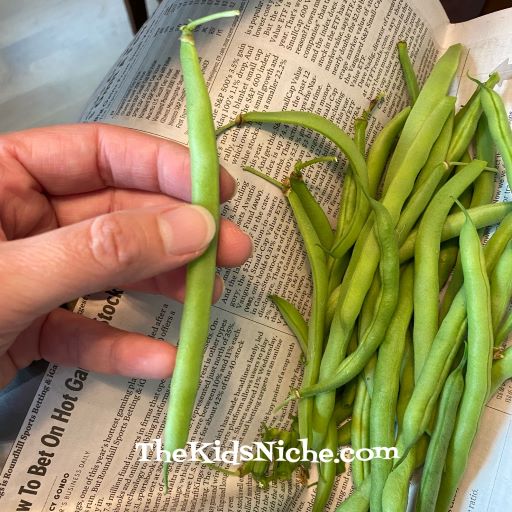
Here’s what a fresh green bean, straight from the garden, looks like:

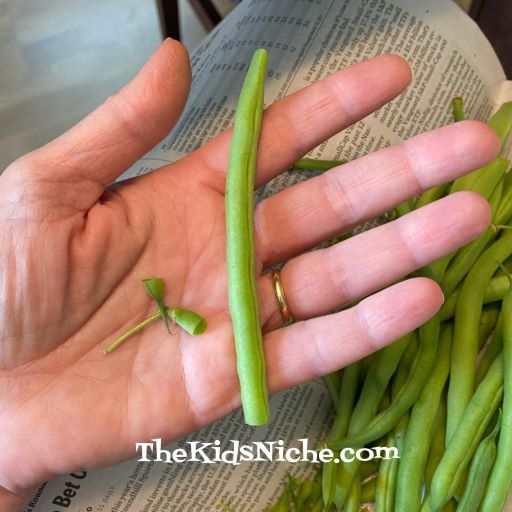
Notice that the bean has a little pointy portion that sticks out on each end. We snip or break both ends off.

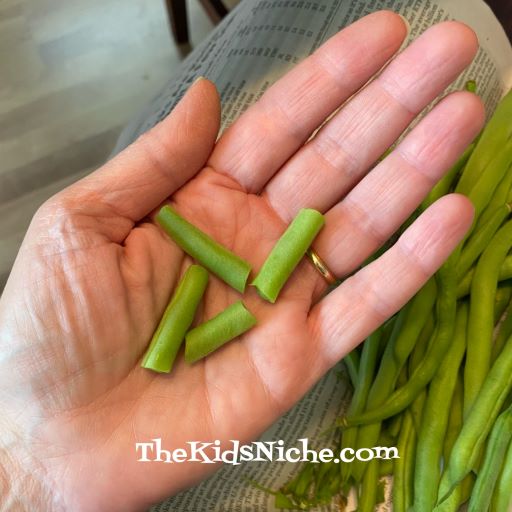
Then we snap or break the bean into several pieces. The number of pieces it’s broken into depends on how long the bean is. Here’s about the size we break them into:

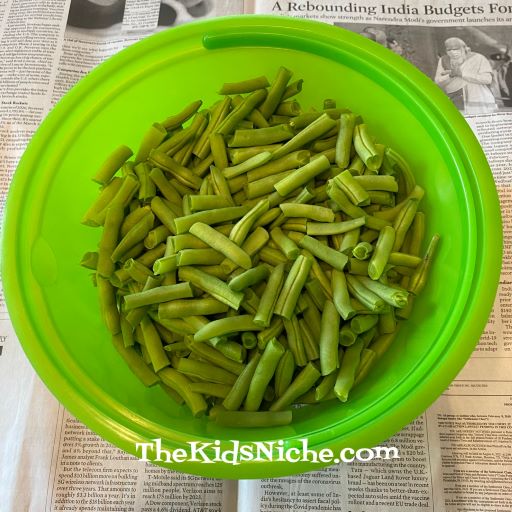
Our big pile of green beans yielded this amount of snapped green beans:

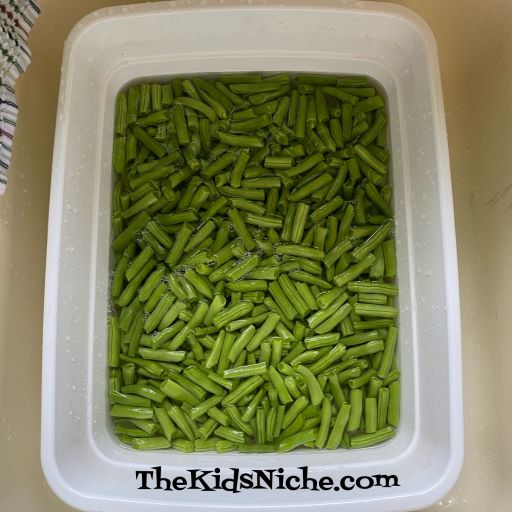
The next thing that happens to the green beans is to put them in a dishpan with water and gently scrub them a little between your hands to get them clean.

Now it’s time to cook them! We put them in a large pan and add some water and put the pan on the stove and turn the heat on. We cook them until they soften to our desired tenderness, which might vary from one person to the next.

I’m not sure these pictures actually show the difference, but the beans will change color somewhat as they cook.

The green beans are finally ready to eat! How do you like to eat your green beans? I like them with butter melted on them and sprinkled with some salt! Yum!! They are also very delicious cooked with some ham.

If you have never done your own green beans from “scratch”, I’d like to suggest you look for some fresh green beans in your grocery store or at a nearby farmer’s market. It’s a great experience for kids and adults to prepare their own fresh green beans. (Mind you, after you’ve done several bushels of green beans at one time, it does get rather tiring! Been there, done that! Lol) I hope you’ve enjoyed this glimpse into fresh green beans straight from the garden! 🙂

Making a Fairy Garden

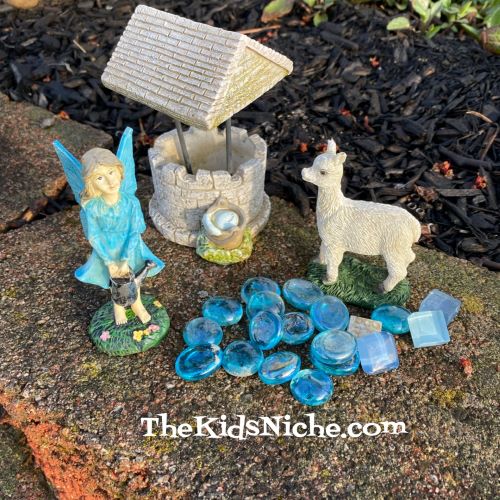
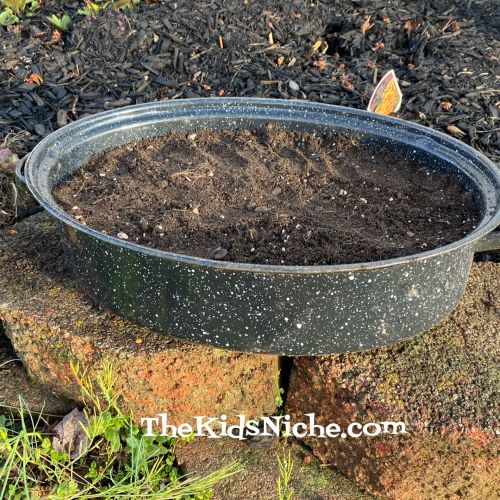
Yesterday was National Gardening Day but I forgot about it. Lol I thought we would honor that holiday by doing a little gardening today. Let’s make a fairy garden! They are easy to make and so much fun. You’ll need a container which can be just an old pan or something inexpensive you grab from the store. You’ll also need some dirt or potting soil, some fairy garden figurines, and a few plants that will stay small.

A great place to find fairy garden figurines is a Dollar General store. They had a whole section of things great for fairy gardens and they were priced at $1.00 each! Other stores like Joann Fabrics or Walmart have fairy garden figurines too, but they are more expensive.

There are different kinds of plants you can get for this project and some stores even have them labeled as good for fairy gardens. I’m using some Hens and Chicks succulents for mine.

Using a nail and a hammer, make a few holes in the bottom of your pan or pot so it can drain excess water. Then add some dirt or potting soil so the container is nicely full but the dirt doesn’t come all the way to the top. Leave a little room at the top so the water doesn’t just run off but stays in the pan.

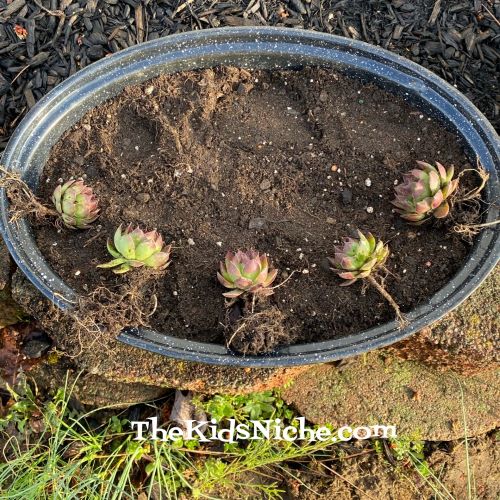
Place the main pieces of your fairy garden figurines in your pot approximately where you want them to be. And lay the plants in place, just on top of the soil. Check your arrangement and make sure everything is right where you like it.

Remove the figurines…you’ll place them back in just a couple of minutes.

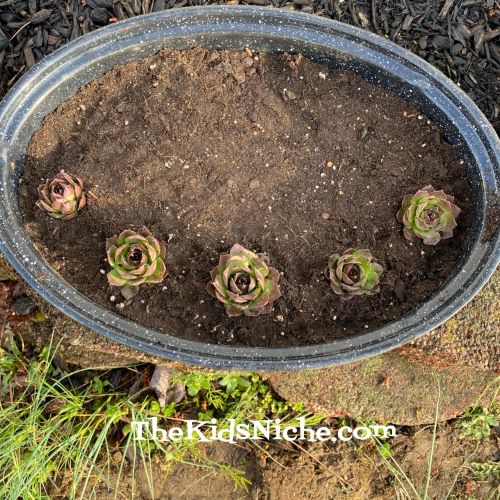
Plant each plant into the dirt and pack the dirt lightly around each one.

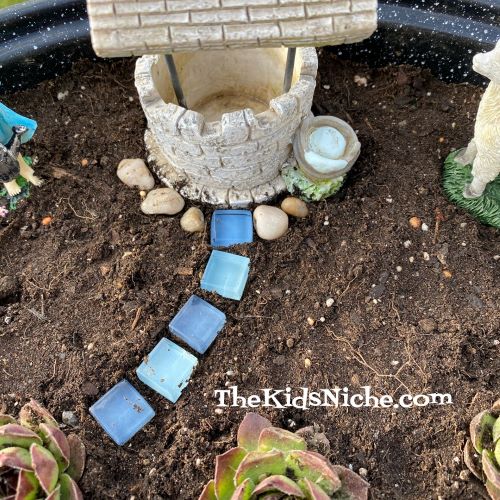
Now place the fairy garden figurines into your garden. Arrange any little stones that you want to use in place now too. You can make a little walking path, if you like.

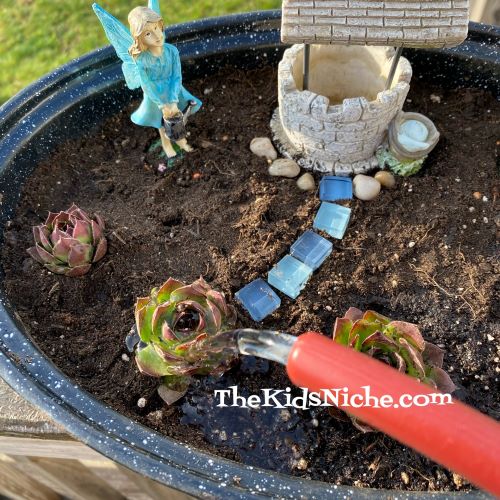
Gently water your plants.

And that’s all there is to it! Place your fairy garden in a place where it can be enjoyed by everyone.

One word of caution, the water will drain out the bottom of your garden so remember that when you decide where to put it. It could leave a little dirt behind. I hope you will make your own fairy garden and enjoy it all spring, summer and fall! A fun activity to do with your fairy garden and your kids is to make up a story involving your little fairy garden and who might come to visit it! 🙂